Windy Days and Trailer Travels
A couple days ago the winds blew in from the west and created quite the upset here in southern Montana. I was out towing our cargo trailer in the next town over and somehow found myself caught in the worst wind storm I’ve ever encountered while towing a trailer. At one point, the rain and crosswinds were so intense that my unloaded cargo trailer was trailing at a very different angle than “straight ahead”. After an additional and very harrowing 10 miles and fearing (and feeling) an imminent tip-over, I threw in the towel and parked it (both truck and trailer) at a friend’s parking lot - returning the next day to pick up our rig.
We were not alone in our parking-and-waiting-it-out adventure. There were pictures of overturned personal trailers and semis, uprooted trees, and telephone poles everywhere in a tangle. With winds hitting a frightening 80mph area in our area (and, subsequently the side of my trailer during my towing incident), they were even more severe in other parts of Montana, topping over 100 mph!
Should I Stay or Hit the Road?
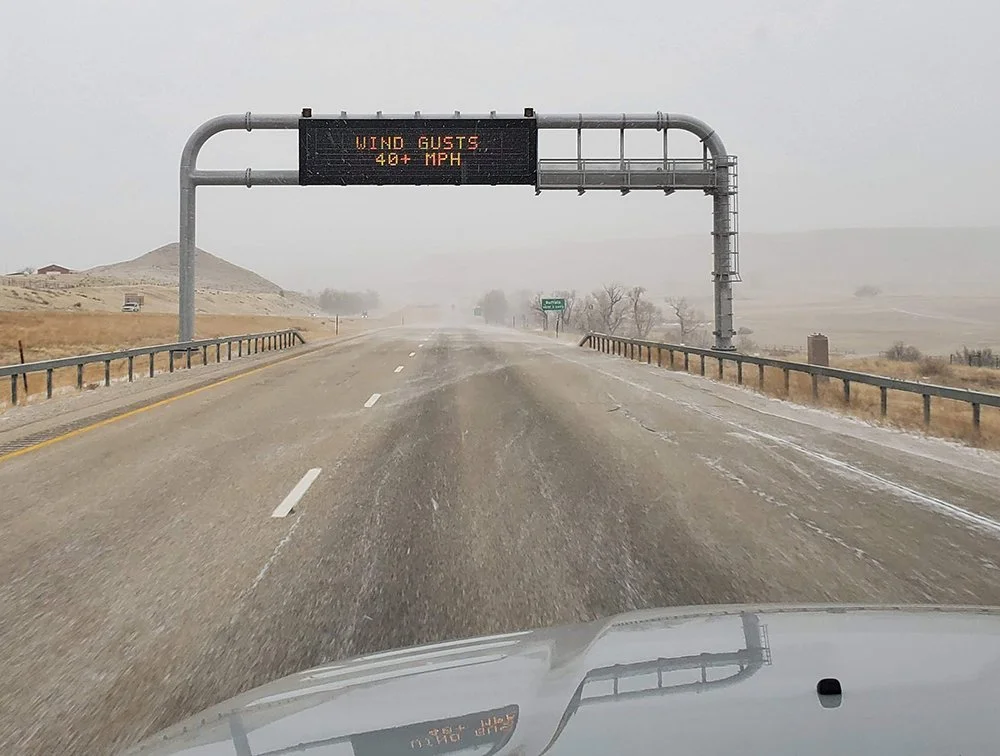
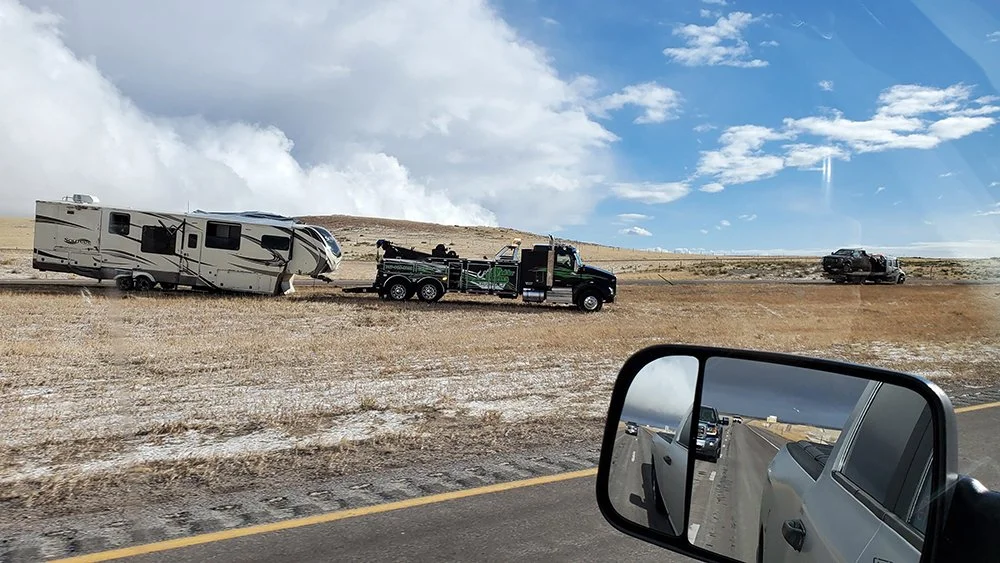
What do you do when you’re out on the open road with your RV and winds like this pick up? It can be one of the hardest calls to actually pull over and put your plans on hold. Afterall, you’ve already paid for your next campground, you’ll be late if you delay, and very important events will be missed. But when you see the aftermath of those that trucked-on and then found themselves resting in the median on their sides surrounded by emergency vehicles, the gravity of the situation becomes real. The choice is obvious: SLOW DOWN, find a safe place to pull over, angle your RV into the wind, and then reassess the situation. If there’s a brief calm in the bad weather, drive your RV to the nearest RV park or rest stop where you can park overnight. Again, if you’re stuck somewhere close to the Interstate, try angling your RV into the wind - after all, your RV is built to wiz down the road at 60-70 mph in the forwards direction.
Having the Right Vehicle Can Make a Big Difference
Another critical factor that cannot be overlooked is your tow vehicle and RV pairing. I can tell you from personal experience (actually, I have a few stories) where I have seen the light from towing with our smaller tow vehicle compared to our larger tow vehicle. The stability you gain can be incomprehensible until you’ve actually experienced both for yourself.
When we picked up our first RV, we made a bad decision and bought something that was way too large for our vehicle, a Tahoe. And, funny enough, our first drive with it was during a very windy day. It felt like we were driving on ice - that solid connection between our tires and the ground was just a mere myth. This was our signal to return it immediately to the dealership and try to figure out what was wrong. This is a story for another day.
When the Parking Angle Leaves Something to be Desired
But what do you do if you’re already parked and settled in for the night when a windstorm arrives? Now we’re in a very different scenario - and a very concerning one because you’ll be sleeping (or attempting to, anyways) in a potentially vulnerable situation. Our most recent example was at Wanapum Recreation Area in Washington state last summer. The below photo was our camping spot for the night.
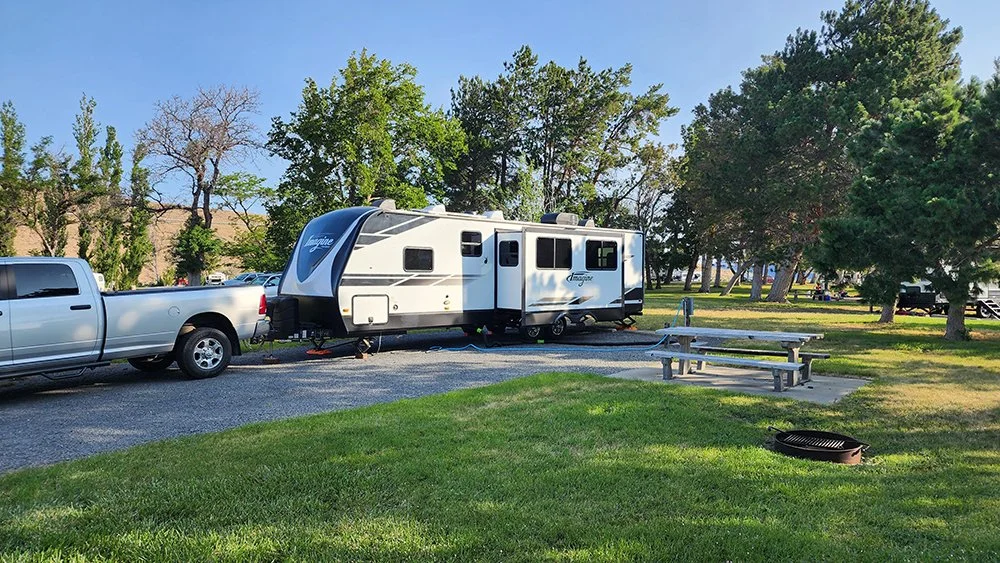
This looks innocent enough, however what was in store for us this evening, no one could have prepared us for. Around 8PM or so the winds started. And they didn’t stop growing in intensity until about 3 or 4 AM. And, worst of all, the winds were almost exactly aligned to our broadside (on the passenger side). Obviously, you want to ensure that your stabilization jacks are extended and firmly planted, but I didn’t feel that this was enough so I proceeded to fill our freshwater tank and our two large grey tanks with water. Doing this can help further lower your center-of-gravity and make it just a little bit harder to tip over. Needless to say, I was pretty tired the next day, but so thankful to not be sleeping on our side, if you know what I mean.
The below photo was taken that next morning. No, the wind is not blowing - it was so calm that not a leaf was moving, but you can see that the trees are frozen - bent over as if they’re in a perpetual windstorm. I have never seen anything like this, but this was our big hint that wind in this area must be a nightly occurrence.
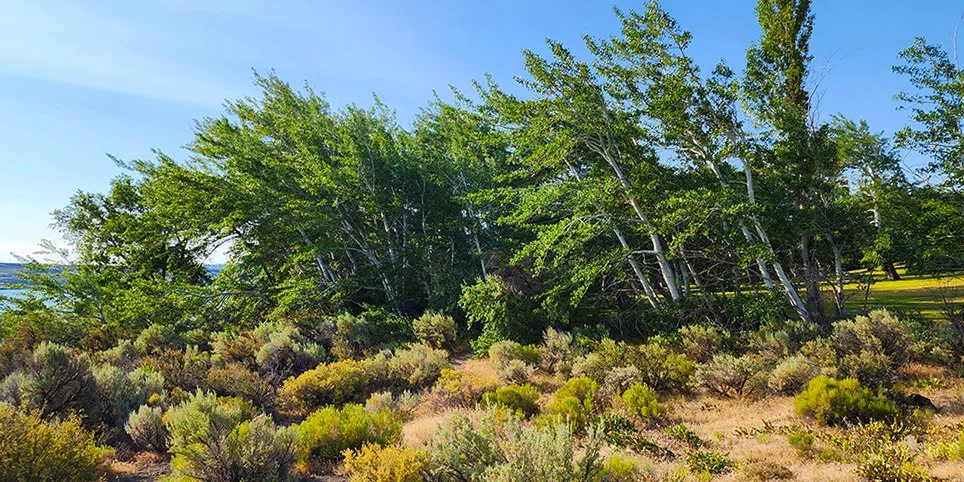
Strangely enough, we stayed here a second time on our way back the following month. However, we were smart enough to book a spot where the nose of the RV would hit the wind head-on. We slept better that night. However, we’re hesitant staying there again, even if the price and location are great.
Do stories like this concern you? Well, if you’re a potential RVer or even if you’re accustomed to this and have other questions about your safety, we want to hear from you. Perhaps we can help you understand better if your RV and tow vehicle are paired correctly so you too have less of these concerning moments… where you can control them, anyways. Take a look at our Tow Vehicle & RV Compatibility Check - we can work together to ensure you’re as safe as you can be while exploring this great country of ours!