

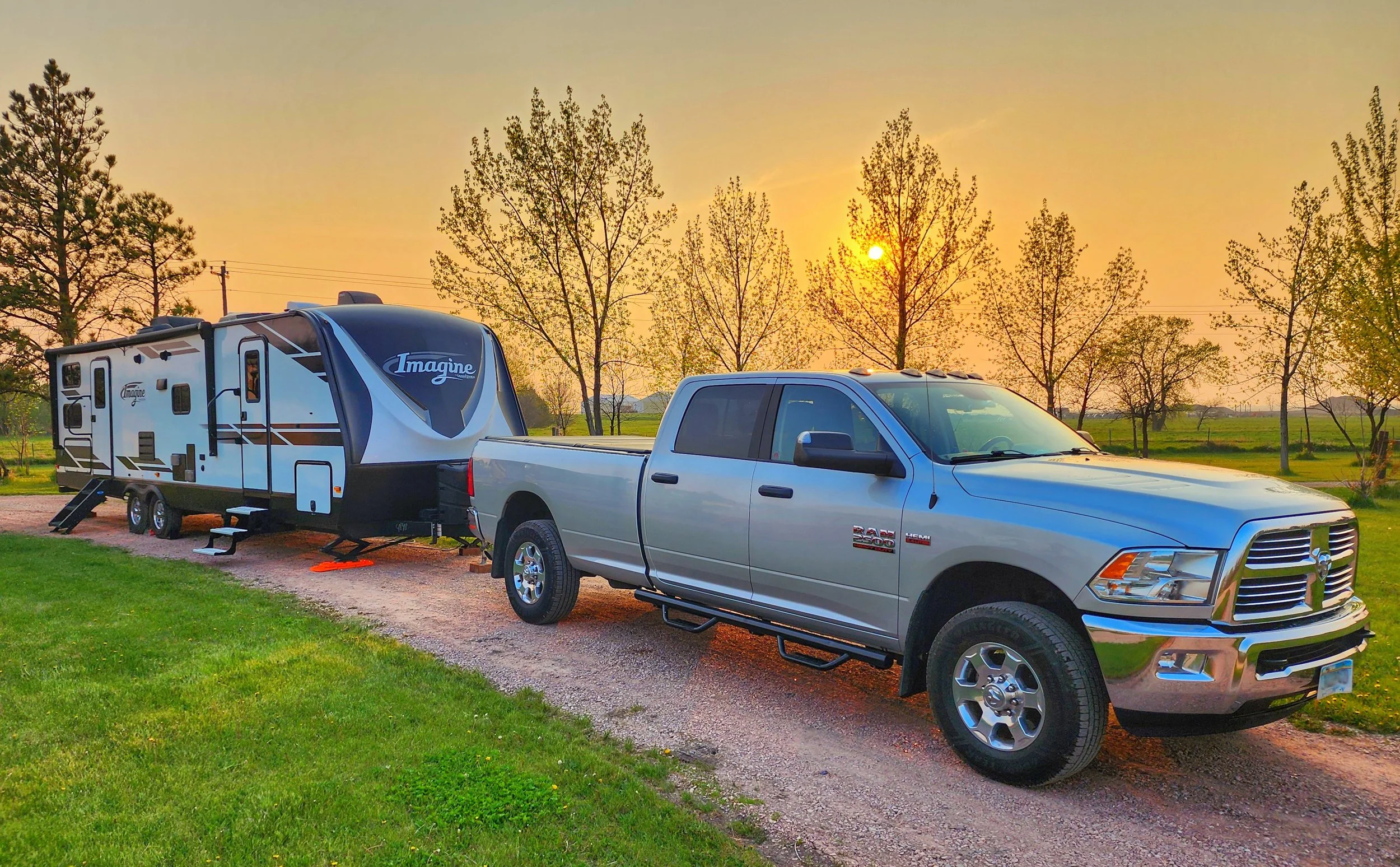
Tow Vehicle & RV Compatibility Check
Know if your truck and RV actually work — before you buy

Most people don’t start here.
This usually comes after you’ve already narrowed down a specific RV or setup… and just want to make sure everything actually works before moving forward.
Most setups don’t fail in an obvious way.
They technically work…
but once you’re on the road, something feels off.
More stress than expected.
More adjustments than you planned.
More money spent fixing things later.
That’s usually when people realize something wasn’t quite right.
This is where you find that out before it happens.
I’ll look at your exact truck and RV setup and give you a clear, experience-based answer:
✔ Safe *
⚠ Borderline *
✖ Not recommended *
So you can move forward knowing what you’re getting into — not guessing.
When This Actually Matters
This is the part most people don’t realize they’re skipping. If you’re just starting out, you’re probably still looking at floorplans, features, and what feels right.
That’s normal.
This is usually the point where everything still looks like it works — but hasn’t been fully validated yet.
Usually right around the point where:
You’re narrowing down to a specific RV
You’re comparing a couple options
The numbers seem like they work
A dealer tells you “you should be fine”
That’s when most people move forward.
And that’s also when a lot of setups start getting locked in… before anyone has really looked at how everything works together in the real world.
This is the point where a second look actually matters.
Not after the purchase.
Not after the first trip.
Before.
Because once you commit, fixing it gets a lot more expensive than checking it upfront.
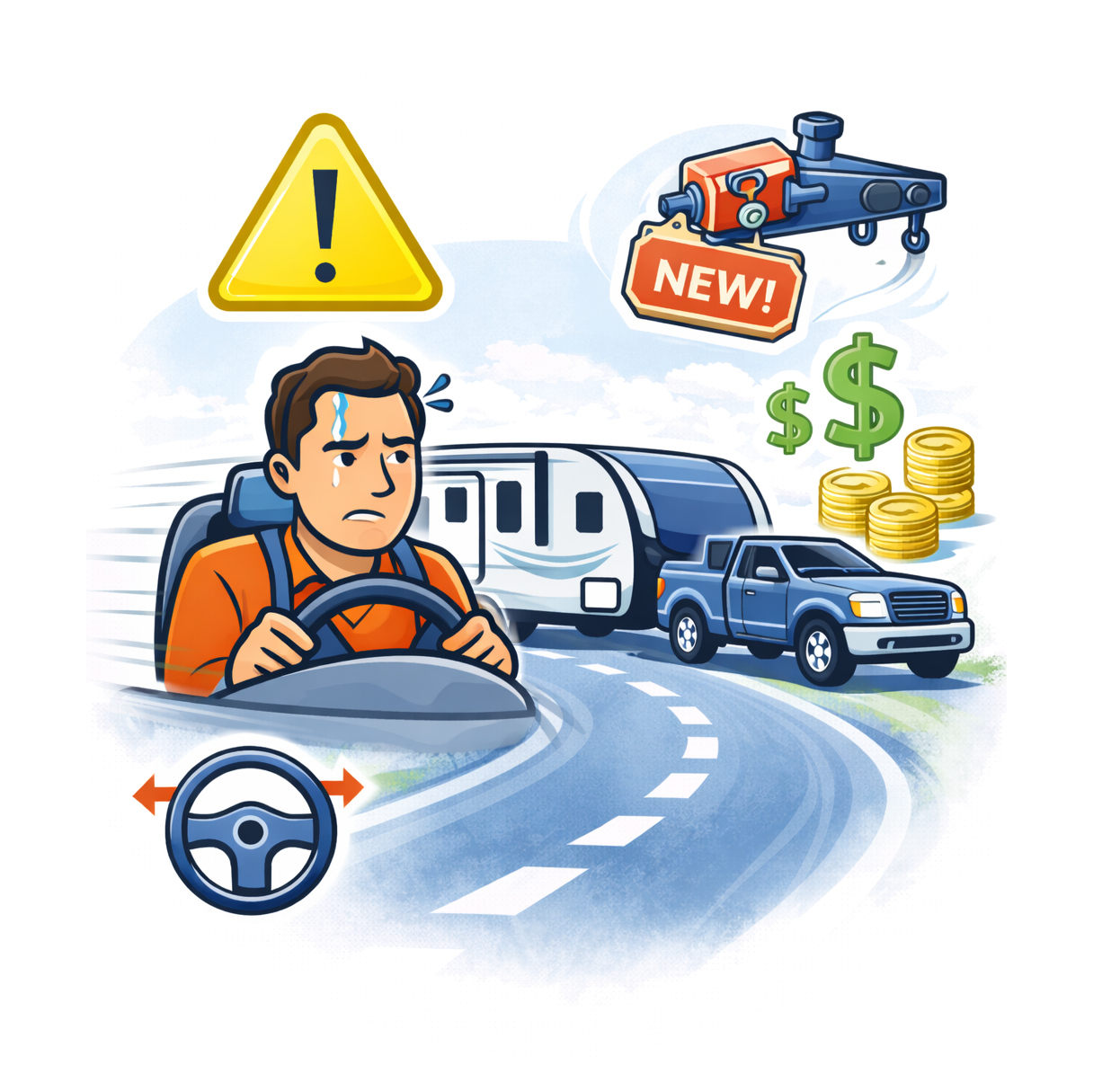
What Happens if You Don’t Check First
Most people don’t realize there’s a problem when they’re buying.
Everything looks like it works.
The numbers seem close enough.
Nothing feels obviously wrong.
It usually shows up later.
The drive feels more tense than expected
You’re making more steering corrections than you thought you would
The setup feels heavier than it should
You start second-guessing things on the highway
And then the adjustments start
Upgrading parts you thought were fine
Trying to make the setup feel better
Realizing you’re closer to the limits than you expected
None of it happens all at once. It’s just one small thing after another.
By the time it settles out, you’ve either:
Spent more money than you planned
Or ended up with something that never quite feels right
Not because you made a bad decision, but just because you didn’t have the full picture before you committed.
What You’ll Walk Away Knowing
At the end of this, you’re not getting a spreadsheet or a bunch of confusing numbers.
You’re getting a clear answer you can actually use.
Here’s what that looks like:
A realistic weight range your truck can handle comfortably
Not brochure numbers — real-world useA clear answer on your specific RV
Safe*, borderline*, or not recommended*Where your limits actually are
So you’re not guessing or relying on estimatesWhether common “fixes” actually help
Like weight distribution hitches — and when they don’tHow close you are to the edge
With a realistic safety margin, not best-case assumptionsWhat would need to change (if anything)
Before you commit — not after
If you want to see what’s behind that answer, here’s what I actually look at:
-
✺ Truck payload rating
The single most important number, calculated specifically for your exact tow vehicle
-
✺ Tow capacity
What your tow rating really means — and what a realistic, safe target looks like
-
✺ GCWR limits
How your full combined setup is evaluated
-
✺ Tongue or pin weight impact
How weight transfer affects your available payload
-
✺ Expected real-world RV loaded weight
Based on how people actually travel — not dry numbers
-
✺ Safety margin analysis
How close you are to your limits, with a realistic buffer
-
✺ Weight distribution recommendations
What helps, what doesn’t, and what applies to your setup
-
✺ Clear final verdict
Safe* / Borderline* / Not Recommended* — in plain language
-
✺ RV Buyer Blueprint (included)
You’ll also get the RV Buyer Blueprint to help you understand how everything fits together
No conflicting advice.
No guesswork.
No trying to piece it together from five different sources.
Just a clear understanding of whether your setup actually works.
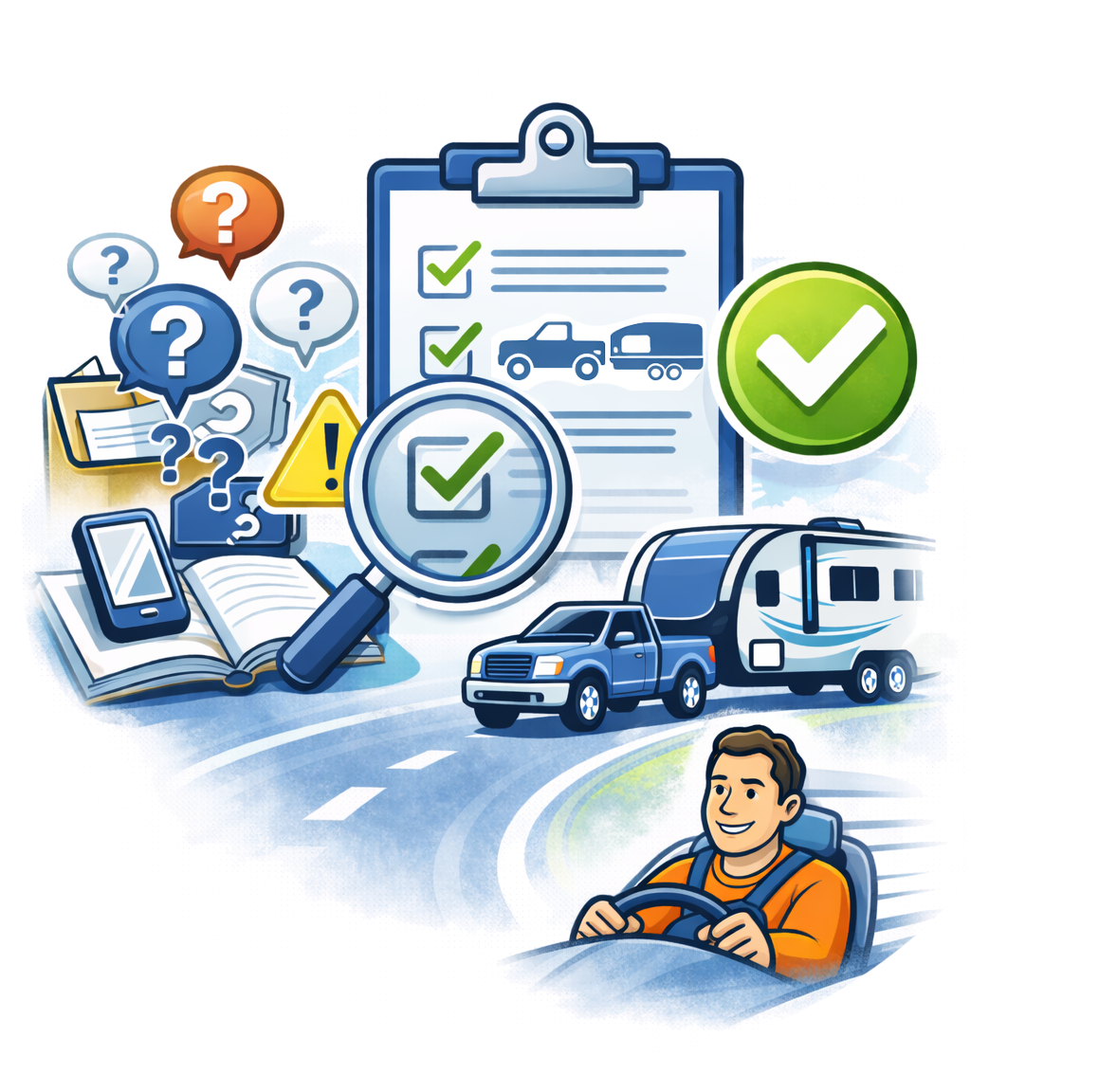
How it works
It’s pretty simple.
Send over your details
Your truck, the RV you’re considering, and anything else relevant (photos are fine)I take a close look at the full setup
Not just one number — how everything actually works together in real-world useYou get a clear answer you can act on
Safe*, Borderline*, or Not Recommended* — along with what’s driving that result
That’s it.
No complicated forms.
No back-and-forth guessing.
No trying to figure it out on your own.
Just a clear answer before you commit.
If you already have a specific truck and RV in mind, this is where you get a clear answer before committing.
Everything up to this point usually looks like it works.
That’s why people move forward.
This is where you find out if it actually does.
If you want to be confident in your setup before you commit, this is the time to check it.
This usually takes just a few minutes to get started.
If you’re still figuring things out and want to understand how all of this fits together first, start with the RV Buyer Blueprint ($49).
Either way, the goal is the same:
A setup that actually works in the real world.
✺ Q & A ✺
-
No.
If you have them, great. If not, I can usually work from photos, VIN, or basic details.Most people don’t have everything perfectly organized—that’s normal.
-
That’s actually a good time to do this.
I can give you a realistic range of what your truck can handle so you’re not guessing while shopping.
-
No.
Calculators use generic assumptions.
This is based on your actual setup, how you plan to use it, and real-world loading—not best-case numbers.
-
Comparing a few RV options
Unsure how close they are to their limits
Relying on dealer guidance but want a second look
Trying to avoid upgrading or fixing things later
-
This probably isn’t necessary if:
You already understand payload, towing limits, and weight distribution in detail
You’re comfortable evaluating a full towing setup on your own
You’ve already confirmed your setup with real-world scale weights and margins
How This Analysis Is Performed
Payload-first calculations (not brochure tow ratings)
Realistic tongue or pin weight assumptions (not best-case numbers)
Loaded RV weight estimates based on usage, gear, passengers, and travel style
Safety margins clearly defined and explained — not hidden
Guidance designed to be verified on a certified scale if you proceed
No dealer incentives, brand bias, or AI-generated estimates
This is not a generic calculator or dealer estimate. Every analysis is performed using real-world assumptions and conservative safety margins to reflect how RVs are actually used.
* These ratings and safety margin estimates reflect advisory assessments based on available data and typical use conditions. They are not guarantees of safety, legality, or real-world performance. Final decisions and outcomes remain your responsibility.