A Huge Problem on American Roads: Overloaded Tow Vehicles
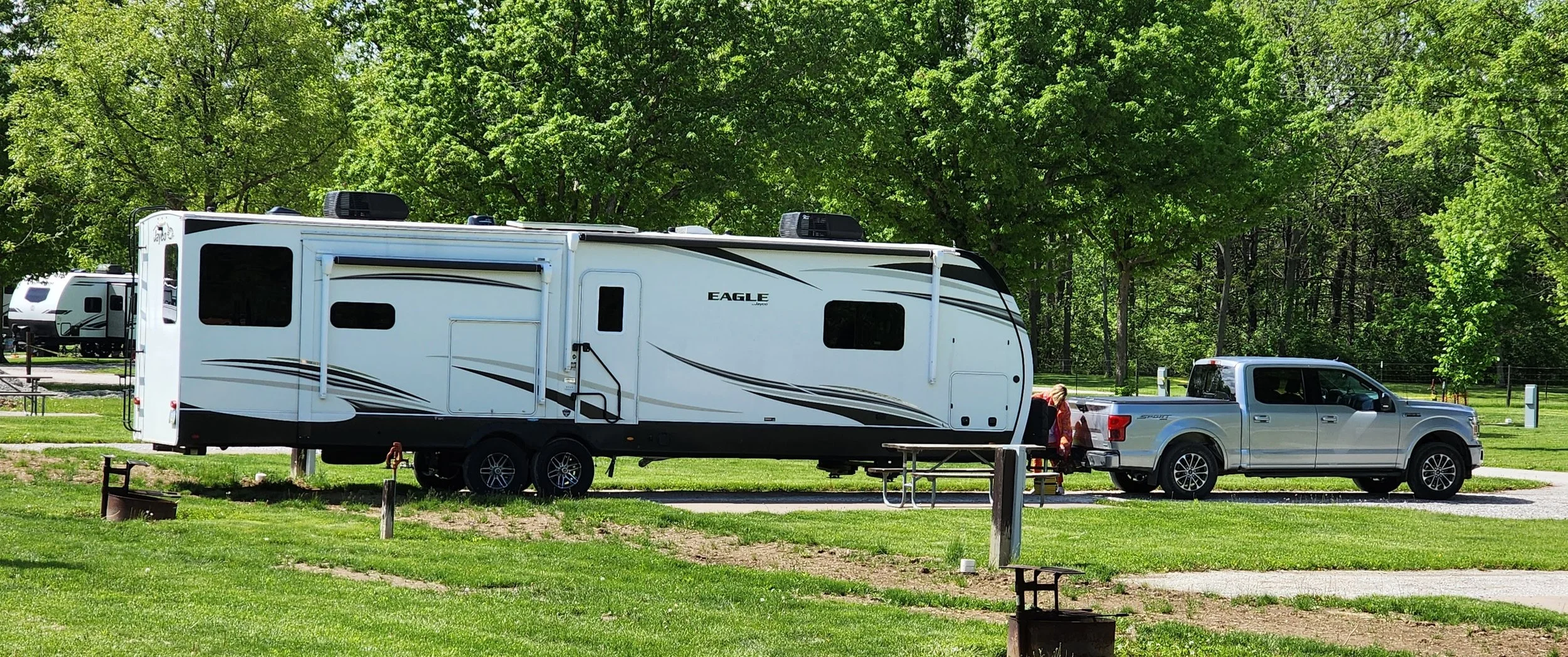
A Ford F150 tows a very heavy Jayco Eagle (2023 332CBOK) that’s better suited for a 1-ton SRW truck. This travel trailer is over 40’ long with a GVWR of 12,250 lbs!
Imagine this: You, your spouse and kids, and even your two dogs load up in your SUV or truck ready for your awesome camping weekend just down the road a few miles away. The family is excitedly talking, the children are cheering, and you sense a feeling of pride that you’re doing one of the most all-American things you can do. From the east, a small breeze picks up and gently tugs your truck and rig to the side. In the back of your mind you have this nagging feeling, though. You know the RV-in-tow is a bit on the heavy side (and maybe, just perhaps, a scoosche long), but that’s ok! The RV dealership and all the “experts” on Facebook in the special, dedicated, truck forums, and even your friend with good “car know-how” told you you’re definitely fine. Afterall, I’ve installed heavy duty shocks and airbags. Everything’s going to be alright…. right?
Well, maybe. Everyone’s doing it. Big RVs and tow vehicles that seem a little… on the small side. BUT, hey, it’s a Chevy - it’s like a rock! It’s a Ford - it’s built Ford tough! It’s a Tundra - they can haul anything! It’s a RAM - NOTHING stops a Ram! Afterall, I’ve never had any problems before and I’ve been doing this for years. We’re going to make it to our campsite and we’re going to be fine. We’ll even pass some bigger trucks pulling smaller RVs to prove that our truck and skills are far superior.
But there are a few people, actually more than just a few, that find out the hard way that perhaps their setup is not as robust as it seems. Especially when, heaven forbid, that last cross-breeze was a little more than you expected, or that car suddenly cut you off and slammed on its brakes, or perhaps that mountain pass was a little too hard on your braking system. C’mon - we’ve all seen the towing disaster videos and photos on social media. That won’t happen to me - I’m more careful than they are.
Yes, these are the scenarios when, in the aftermath, the legal system will be there to greet you with open arms. Was the tow vehicle and RV trailer properly paired? Was there even a chance that the tow vehicle was overloaded? If so, you’re not only in for a world of hurt by having your insurance claim denied, but you may find yourself in the middle of a lawsuit that could permanently alter your entire future. And, worst of all, there could be fatalities involved as a direct result of all that “great” advice you’ve gotten along the way.
If I had a dollar for every overweight tow vehicle we’ve seen while we’re out on our journeys, we’d have… well, a lot of dollars. Actually, it’s become more of a game with a small jingle we sing whenever we see a 1/2 ton truck or SUV clearly pulling something that’s way out of it’s intended capabilities. Frustrated, there’s nothing else we can do besides shake our head and give the jingle a little sing in the car. In our estimations (and this is purely from what we’ve observed over the past 10 years from coast-to-coast, half of all tow vehicles are overloaded. Actually, this estimate is even greater if we take into account the safety margin being sucked away when tow vehicles are loaded to their max.
The surprising thing is this: the vehicle manufacturers and RV dealerships will tell you it’s fine - sorta. And don’t be fooled with the RV dealership’s website calculation tools because those are frequently wrong - they are just giving you the best-case scenario where the RV is almost empty and using those figures in the final numbers they present to you.
Why do I know all this? Because this has happened to us personally multiple times when looking at trucks and RVs for purchase over the past 10 years. See, there are numbers you need to pay attention to to ensure you’re actually within the legal limits. And, there is a safety margin you want to stay within so you’re not even at the top of those safety limits. Here at RV Tow Lantern, we’re trying to prevent those “white knuckle” experiences just getting to and from the campground. We’ll get into exactly how to calculate the actual numbers and limits in another blog post, but for now, really take the time to assess what you are towing with (or plan on towing with), and perhaps listen to that little voice in your head telling you that maybe, just maybe, you might not have the correct towing setup. Jiminy Cricket was onto something when he said “Let your conscience be your guide.”, but first you have to train (or re-train) your conscience on what is actually safe and what is not.
It’s OK to Admit You Need Help With Your Trailer Weight Numbers
Sure, there are a dime-a-dozen videos out there discussing payloads and tow capacities, but not all of them are correct! Believe me, I watch as many as I can. Heck, there are even some YouTubers we like to watch that clearly have an overloaded tow vehicle setup but always seem to dodge the issue when it’s brought up in the video or the comment section. One, in particular (Open Roading), admitted this when they sold their old 3/4 ton truck they used to haul both a large 5th wheel and a motorcycle strapped to their front bumper. By the way, great channel and awesome personalities - highly recommended watching this channel as they’re not afraid of admitting their mistakes and take you along on their learning journeys. Bravo, Open Roading! Open Roading eventually purchased a proper 1-ton truck for their RV application.
However, there are some very competent RV YouTubers that actually understand the real capabilities and engineering aspects behind the correct towing numbers and calculations. For example, JD from BTBRV provides excellent guidance on this whenever the topic comes up (and, lately, Josh the RV Nerd has gotten much better at this too - we love you, Josh!).
Airbags And Suspension Mods are NOT Enough
We should also note that airbags and Timbren or other suspension upgrades DO NOT INCREASE YOUR VEHCILE’S TOWING OR PAYLOAD NUMBERS! Nor do weight distribution hitches or other magical remedies the internet seems to be in great supply of. Sure, maybe your vehicle might not “sag” as much, but in the end, the legal numbers are the legal numbers.
The important takeaway here is that you need to filter out the garbage online that soothes your worries about something you suspect, if not admitting out loud, just might be wrong. And, no, we’re not falling for the age-old silly rebuttal that you need a dually or even a semi truck to haul a small, single-axle travel trailer. That’s a deflection technique people use to defend their own bad decisions and judgements - to draw attention away from what they have done or believe. Ignore the subsequent thumbs-up on those posts as well as it attracts the same likeness and support.
We’re here to help put your mind at ease and assist in taking some of that guess work out of your analysis. There are ways to properly ensure you have the RIGHT setup for your vehicle/RV combination. Let’s ensure that your fun weekend outing doesn’t someday turn into a legal (or worse) lifetime nightmare. Sign up today for an assessment of your current setup and we’ll try to give you a plan that puts your mind at ease.
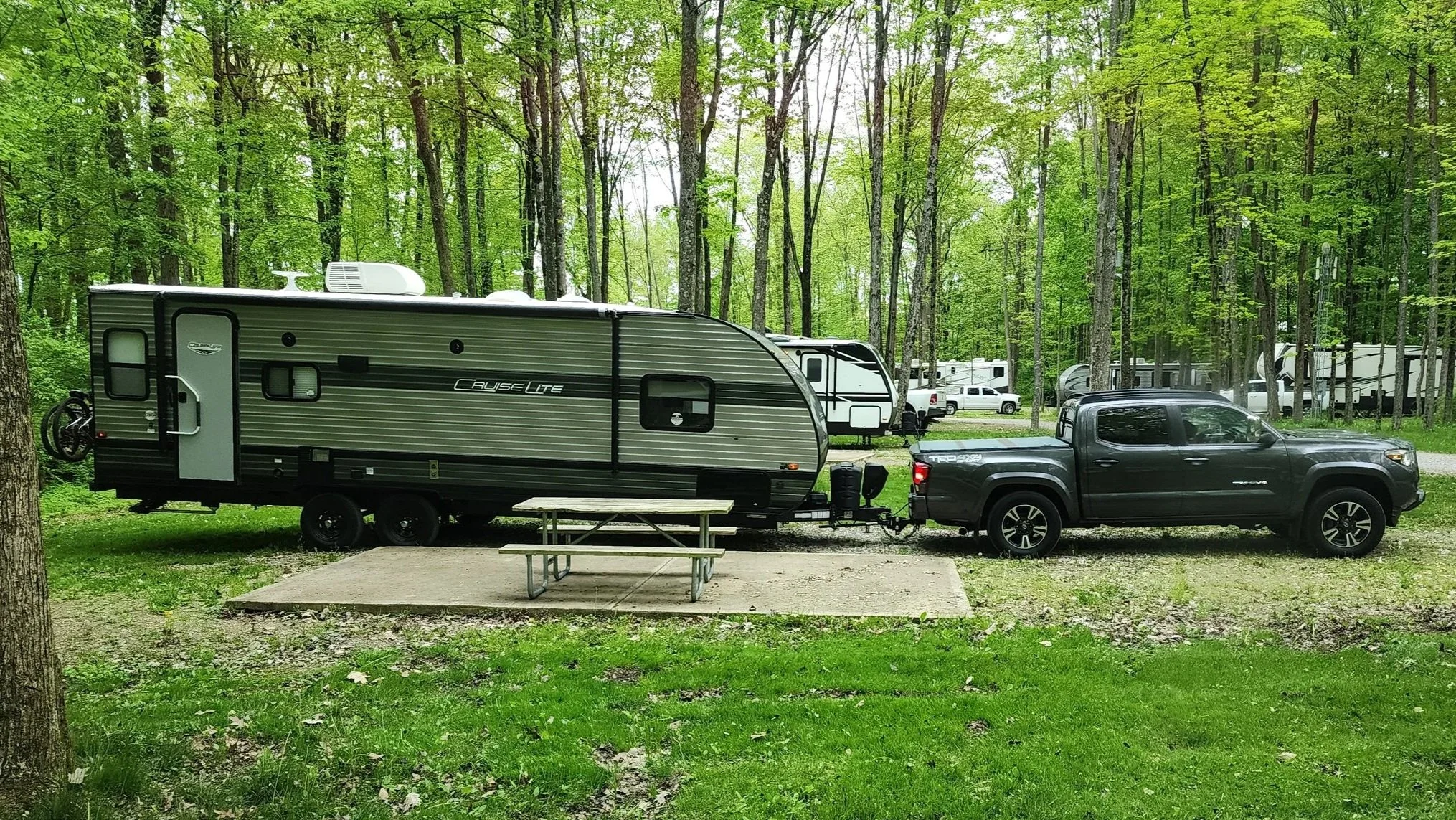
A Toyota Tacoma tows a very large travel trailer that’s more suited for a ¾ ton truck.